Task Management System
Court Case Management System Development for African Judiciaries (2026 Guide)
- Written by
Shishu Yadav - Posted on
Jun 30, 2026
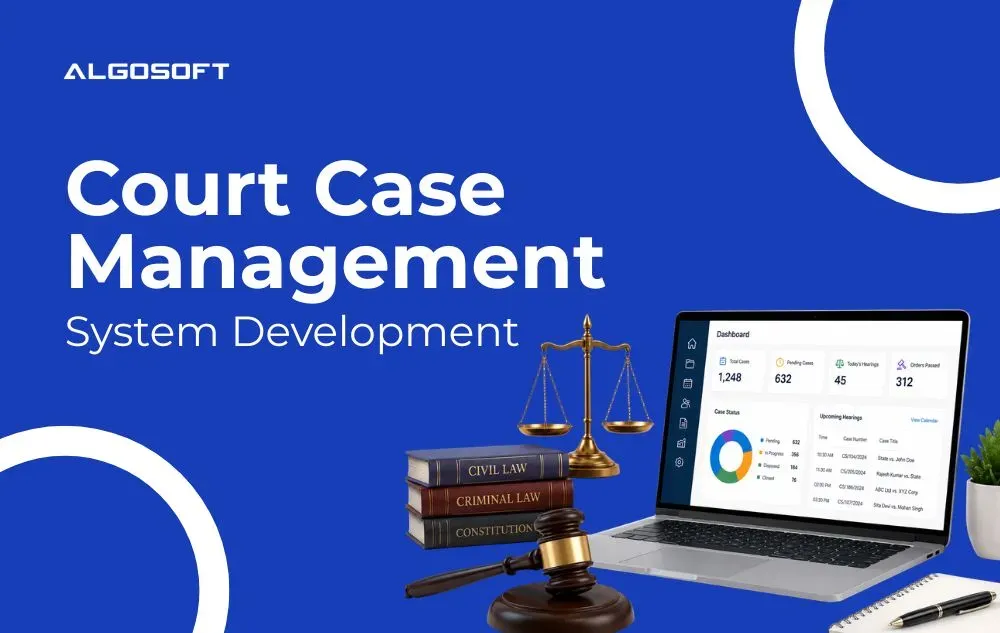
Court backlogs across Africa routinely stretch into years, with case files lost, hearing dates missed due to poor scheduling coordination, and litigants traveling long distances only to find a hearing postponed for reasons no one communicated in advance. From the High Courts of Nigeria and Kenya to magistrate courts in Ghana, South Africa’s judicial system, and the rebuilding judicial infrastructure in Libya and Somalia, court case management system development has become a central pillar of judicial reform efforts across the continent.
This guide covers what a modern court case management system includes, how it reduces backlogs and improves access to justice, realistic development costs, and how judiciaries should approach this kind of sensitive, high-stakes digitization project.
Reducing Case Backlogs — Automated scheduling, case tracking, and workflow management directly address the administrative inefficiencies that contribute significantly to court backlogs, separate from the deeper resourcing challenges judiciaries also face.
Improving Access to Justice — Digital case status tracking and electronic filing reduce the need for litigants — particularly those in rural areas — to travel repeatedly to court premises simply to check on case status or file routine documents.
Strengthening Judicial Transparency — Case management systems create auditable records of case assignment, scheduling, and disposition timelines, supporting judicial accountability and reducing opportunities for improper case manipulation.
Supporting Evidence-Based Judicial Reform — Comprehensive case data enables judiciaries and justice ministries to identify systemic bottlenecks — specific case types, courts, or procedural stages causing the greatest delays — and target reform efforts accordingly.
1- Electronic Case Filing Digital submission of new case filings, pleadings, and supporting documents, reducing reliance on physical paper filing and the document loss risk that comes with it.
2- Case Assignment and Scheduling Automated case assignment to judges based on configurable rules (case type, court division, judicial workload balancing) and intelligent hearing scheduling that reduces double-booking and last-minute postponements.
3- Case Status Tracking Portal A public or restricted-access portal allowing litigants, lawyers, and authorized parties to check case status, upcoming hearing dates, and filing deadlines without requiring an in-person court visit.
4- Document and Evidence Management Secure digital storage for case documents and evidence, with strict access controls, version history, and chain-of-custody tracking for sensitive materials.
5- Judgment and Order Recording Digital recording and archiving of judgments, orders, and rulings, creating a searchable judicial precedent database over time.
6- Notification and Reminder System Automated SMS or email notifications for hearing dates, filing deadlines, and case status changes — particularly valuable for litigants and lawyers managing multiple cases across a court system.
7- Judicial Performance and Backlog Analytics Dashboards giving chief justices, court administrators, and justice ministries visibility into case disposition rates, backlog trends, and bottlenecks by court, case type, or judge.
Strict Access Control and Confidentiality Court systems handle highly sensitive information — including cases involving minors, sexual offenses, and national security matters — requiring granular, role-based access control built around Data Protection & Privacy principles from the ground up.
Integration with Prosecution and Prison Systems For criminal case management specifically, integration with prosecutorial case tracking and correctional facility systems helps prevent the scheduling failures that contribute to pretrial detention overcrowding — a serious issue across several African justice systems.
Multi-Language and Multi-Court-Level Support Court systems spanning multiple languages (particularly relevant in Nigeria, Kenya, and South Africa) and multiple court levels (magistrate, high court, appellate) need architecture flexible enough to accommodate varying procedural rules at each level.
Offline Capability for Rural Courts Many magistrate and customary courts operate in areas with limited connectivity, making offline-capable case filing and synchronization essential for genuinely nationwide system adoption.
| Project Scope | Estimated Cost Range (USD) | Typical Timeline |
| Single Court/Division Pilot | $60,000 – $150,000 | 4–7 months |
| Multi-Court Regional Platform | $200,000 – $500,000 | 9–15 months |
| Full National Judicial Case Management System | $500,000 – $1.5M+ | 15–24 months |
Nigeria — With a federal court structure spanning federal, state, and customary courts, Nigerian court case management projects often need significant configuration flexibility to accommodate varying procedural rules across jurisdictions.
Kenya — Kenya’s judiciary has made notable progress with its e-filing and Judiciary Transformation Framework initiatives, creating a strong foundation that new system components should build on and integrate with rather than duplicate.
Ghana — Ghana’s judicial service has prioritized case backlog reduction as a core reform objective, making automated scheduling and case assignment particularly high-value modules for Ghanaian court projects.
South Africa — South Africa’s Court Online initiative and broader judicial digitization efforts mean new development projects often focus on extending and integrating with existing electronic case management infrastructure.
Libya — Judicial system rebuilding in Libya benefits from modular, phased case management deployment that can support core court functions even amid broader institutional reconstruction.
Somalia — Court case management in Somalia often involves close coordination between formal court systems and customary or religious dispute resolution mechanisms that remain widely used, requiring careful system design that acknowledges this dual reality.
Generic case management software exists, but most African judiciaries achieve significantly better outcomes with a custom software development approach because:
Algosoft’s enterprise software development practice, combined with rigorous Data Protection & Privacy practices, supports judiciaries building case management infrastructure where both efficiency and confidentiality are equally critical.
1- Demand demonstrated experience with role-based access control suited to highly sensitive judicial data.
2- Confirm configuration flexibility for multiple court levels and varying procedural rules.
3- Ask about integration capability with prosecutorial and correctional facility systems if criminal case management is in scope.
4- Evaluate offline functionality for rural or lower-tier court deployment.
5- Clarify analytics and reporting capability for judicial leadership tracking backlog and performance trends.
How long does it take to build a court case management system?
A single court or division pilot can launch in 4–7 months, while a full national judicial case management system typically takes 15–24 months depending on the number of court levels and jurisdictions involved.
How much does court case management system development cost?
Costs range from roughly $60,000 for a single court pilot to $1.5 million or more for a comprehensive national judicial platform.
Can a case management system reduce court backlogs?
Yes, significantly — automated scheduling, intelligent case assignment, and digital case tracking address major administrative sources of delay, though backlog reduction also depends on broader judicial resourcing and reform efforts.
How does the system protect sensitive case information?
Through granular, role-based access control that restricts visibility based on case sensitivity, user role, and court level — critical for cases involving minors, sexual offenses, or national security matters.
Can the system support both formal courts and customary dispute resolution processes?
With the right design, yes — particularly important in contexts like Ghana, Somalia, and parts of Nigeria where customary or religious dispute resolution mechanisms operate alongside formal court systems.
Court case management system development directly addresses one of the most persistent barriers to justice across Africa — chronic case backlogs and administrative inefficiency that delay resolution for litigants who often cannot afford years of waiting. Whether your judiciary is planning a focused pilot for a single court division in Ghana or a comprehensive national platform spanning every court level in Nigeria or South Africa, the right development partner brings both technical rigor and genuine sensitivity to the confidentiality this category of system demands.
Ready to discuss a court case management project for your judiciary? Talk to Algosoft.
Land disputes are among the most persistent sources of conflict, economic ineffi..

In today’s fast-paced digital world, managing tasks efficiently is no longer o..
Typically replies instantly
Share this article